





Acoustic foam
Are you looking for high-quality sound-absorbing material? At Fibers & Foams you will find an extensive range of acoustic foams. Think of different types of foams such as polyurethane, egg crate foam and melamine foam. These foams are perfect for reducing sound in various situations.


Sound-absorbing foam
Sound-absorbing foam is used to reduce sound. By absorbing sound, the acoustics in a room where the foam is placed are improved. It is an affordable solution to enhance the sound quality in the room.
If you are looking for a simple way to improve acoustics in enclosures, machinery, cars, boats, or studios, sound-absorbing foam might be the solution. Fibers & Foams offers various types of foam, such as:
- EASYfoam polyurethane foam
- EASYbond flock foam
- Pyracoustic melamine foam
Each of these foams has unique characteristics, but they are all characterised by their high absorbency. The absorption value indicates how well a product absorbs sound. A too low absorption value can result in an echo, while a too high value can absorb sound too quickly. It is therefore important that the absorption value is right. Various factors influence the absorption value, such as the type of material and the thickness of the material.
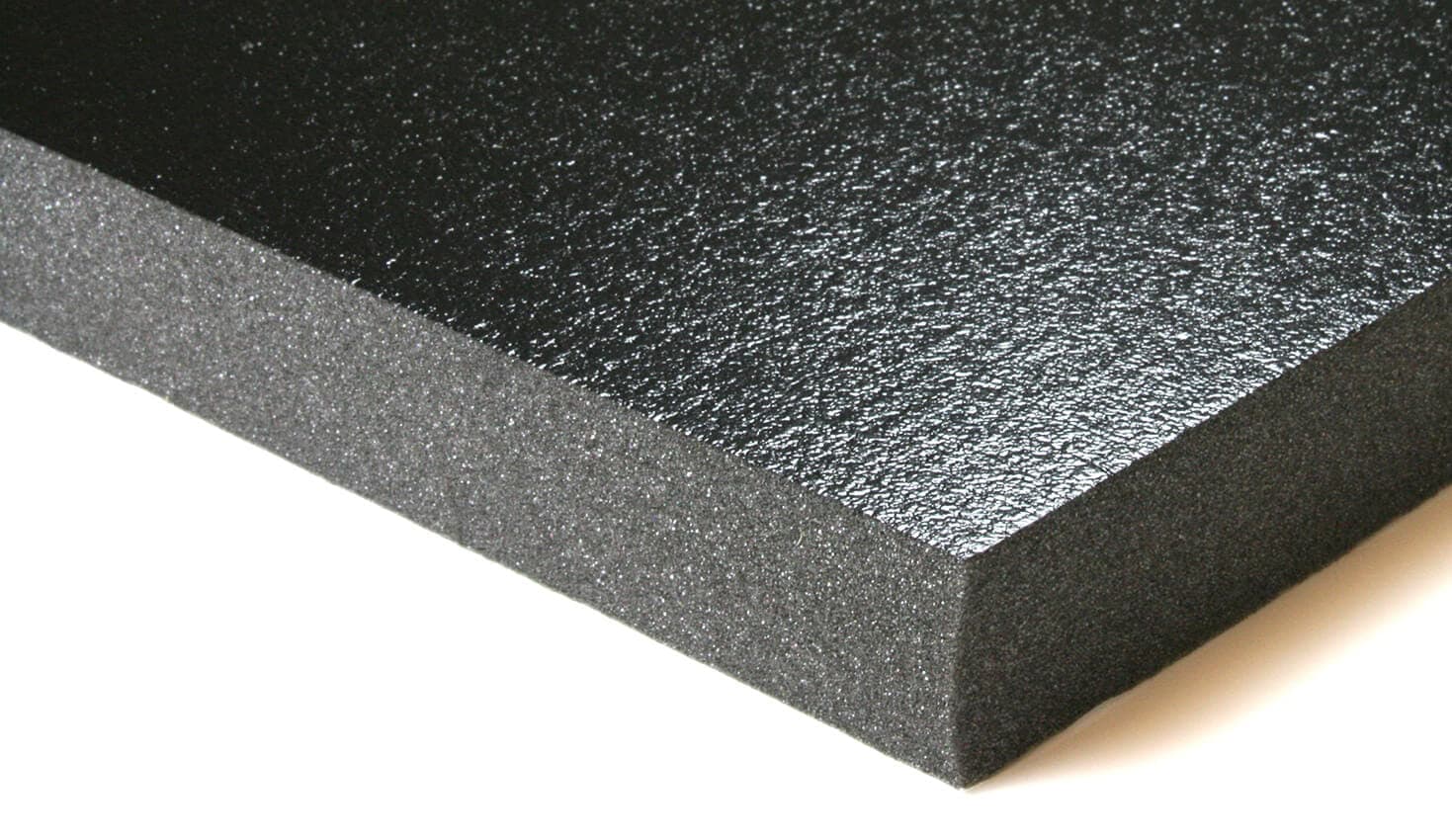
EASYfoam polyurethane foam
EASYfoam can be delivered with a self-adhesive backing, making it easy to install the foam. Additionally, it is possible to obtain sound-absorbing foam with a top layer that is resistant to moisture and oil. The EASYfoam AC2 and EASYfoam PU are highly suitable for this purpose.
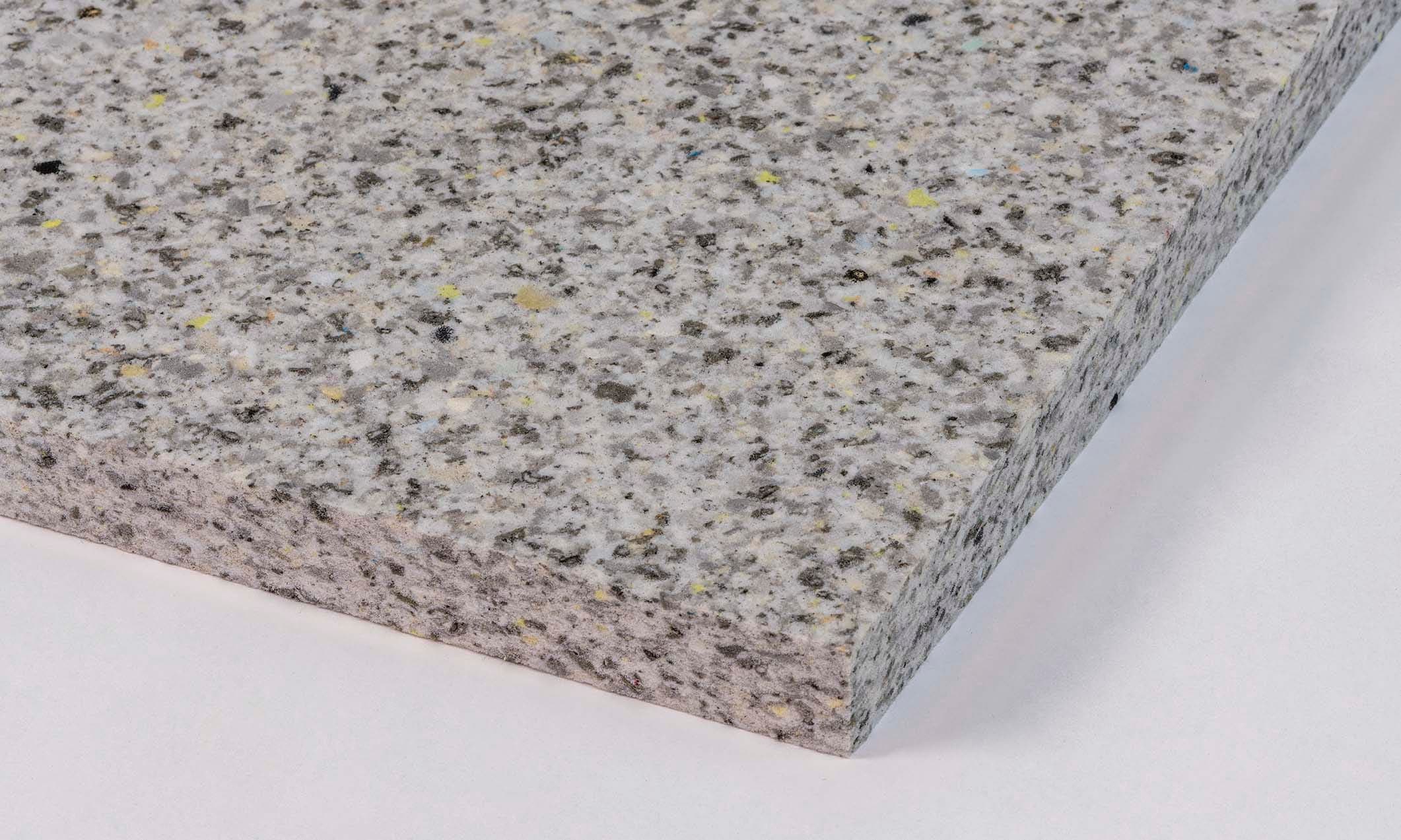
EASYbond vibration isolation
EASYbond, also known as flock foam, is made from recycled polyurethane foams. It is ideal for damping vibrations under appliances such as washing machines, drum kits or other sources of vibrations. It can also be used as damping under parquet or laminate floors. Because EASYbond uses recycled material, the colour of each batch may vary slightly, giving each sheet a unique colour.
EASYbond is available in various sizes and thicknesses. The 1 cm thick version is perfect for under parquet and laminate floors due to its optimal density. The 3 cm thick variant is ideal for creating floating floors, such as in sound studios. It can also be used effectively under vibration sources such as washing machines or drum kits.
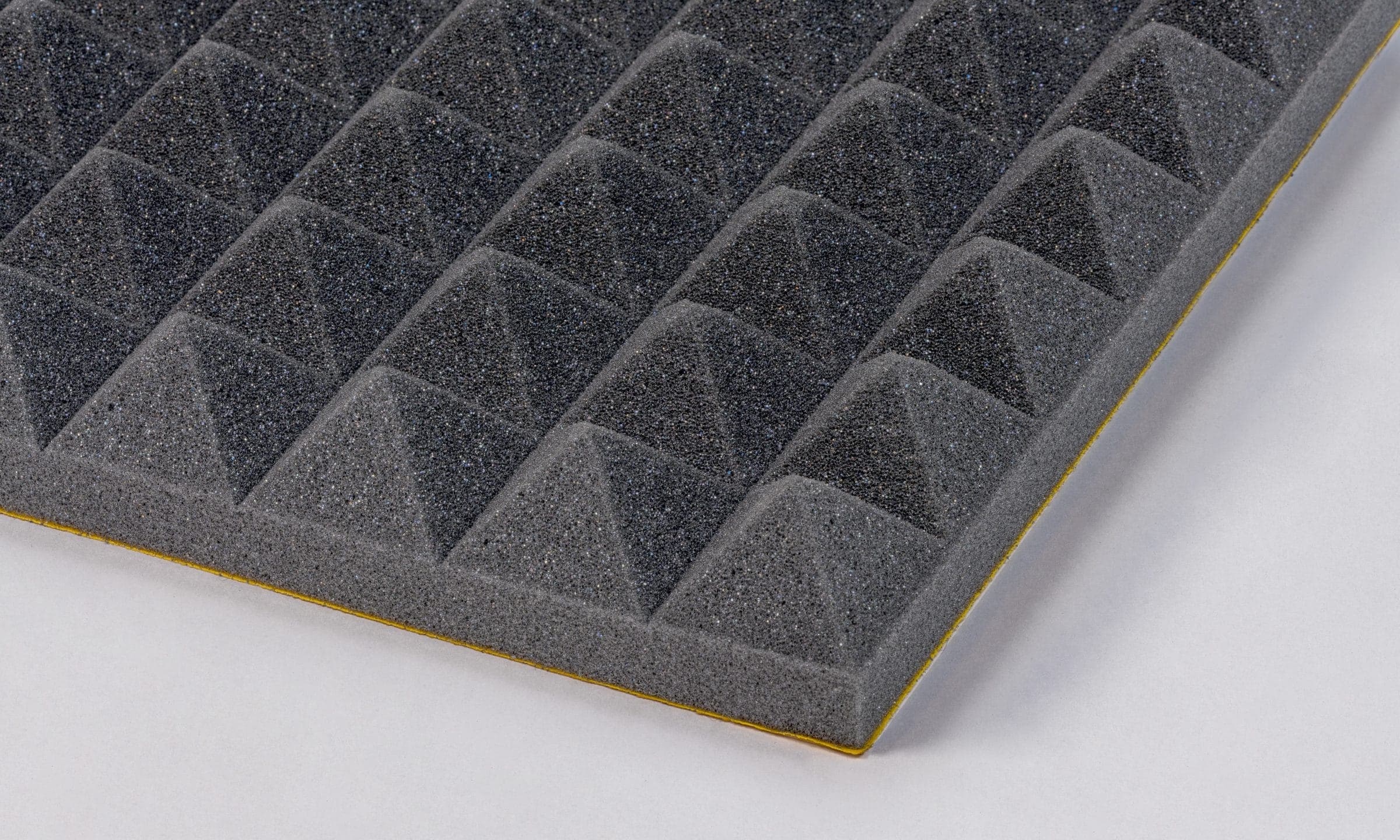
Pyramidal acoustic melamine foam
Pyracoustic melamine foam is an affordable acoustic solution. Thanks to the self-adhesive backing, it is easy to install in any desired location. The panels have dimensions of 120 x 60 cm. We offer two variations: one with straight edges and one with bevelled edges. The version with bevelled edges is convenient when you want to place multiple panels next to each other. You can choose between panels that are 30 mm and 50 mm thick.
How do you install acoustic material?
As acoustic foam is a soft material, you can easily cut it to size with a sharp knife, such as a Stanley knife. It is also possible to order foam with a self-adhesive backing, making it easy to attach to walls, ceilings, or other surfaces. The adhesive is very strong, so once the foam is applied, the panel cannot be moved.
For a proper installation of the acoustic foam, it is essential that the surface is clean, dust-free, dry, and free of grease. If the surface is not flat, it must first be treated with contact adhesive to ensure proper adhesion.
Fire-resistant acoustic foam
Not all acoustic foams are suitable for use in public spaces as they may not meet fire safety requirements. Fortunately, in our range we have the EASYfoam FireSeal, which complies with fire safety standards according to EN13501. This means that this product has excellent fire properties and is safe for use in public spaces.
What are the benefits of acoustic foam?
Acoustic foam offers various benefits for different applications. Firstly, it effectively absorbs sound waves, reducing the reverberation time in a space and enhancing the overall sound quality. This results in better speech intelligibility, reduced noise disturbance, and a more pleasant acoustic environment for both work and living spaces. Additionally, acoustic foam can also reduce echoes and reflections, which is especially useful in rooms with hard surfaces such as studios or offices with lots of glass and concrete. Furthermore, acoustic foam helps reduce sound transmission between spaces, thereby enhancing privacy and comfort.
How do I choose the right acoustic foam for my application?
When choosing the right acoustic foam, it is important to consider factors such as the acoustic properties of the foam, the dimensions and thicknesses required for your specific space, fire safety requirements, ease of installation, and any additional features such as water resistance or self-adhesive backing.
FAQ
What does acoustic foam do?
Acoustic foam prevents reflections by absorbing sound. This reduces echo within a space. In machine enclosures, the noise level inside the enclosure decreases, thereby limiting noise disturbance outside the enclosure. Acoustic foam has an open structure and is often lightweight. Soundproofing materials, on the other hand, are solid materials with high mass and block sound. The sound remains outside or inside the insulated space, such as a room in a house or a machine enclosure.
Do acoustic foams really work?
Acoustic foams really work. They reduce the reflection of sound waves, which shortens the reverberation time. This results in less echo and a lower noise level in a room or enclosure.
Note: acoustic foam is NOT soundproofing. It does not block sound, but absorbs it within the space. For soundproofing, solid, dense materials are needed that block sound rather than absorb it, such as rubber, plaster, or special insulation panels.
The best acoustic results are often achieved by combining sound-absorbing and sound-insulating materials. This effectively addresses both sound reflections and sound transmission.
What is the difference between foam and acoustic foam?
Acoiustic materials have been specially developed to absorb sound waves and reduce reverberation. The correct porosity and breathability are crucial for effective performance. Depending on the application, properties such as fire behavior, UV resistance, and moisture resistance also play an important role.
What type of foam is best for sound insulation
Acoustic foam by itself does not provide sound insulation. For effective soundproofing, a sealed, airtight material such as steel plate, wood, or plasterboard is necessary. The more mass, the better the insulation. Acoustic foams are used in machine enclosures to enhance the soundproofing of the case. EASYfoam FireSeal is a suitable solution for this purpose.
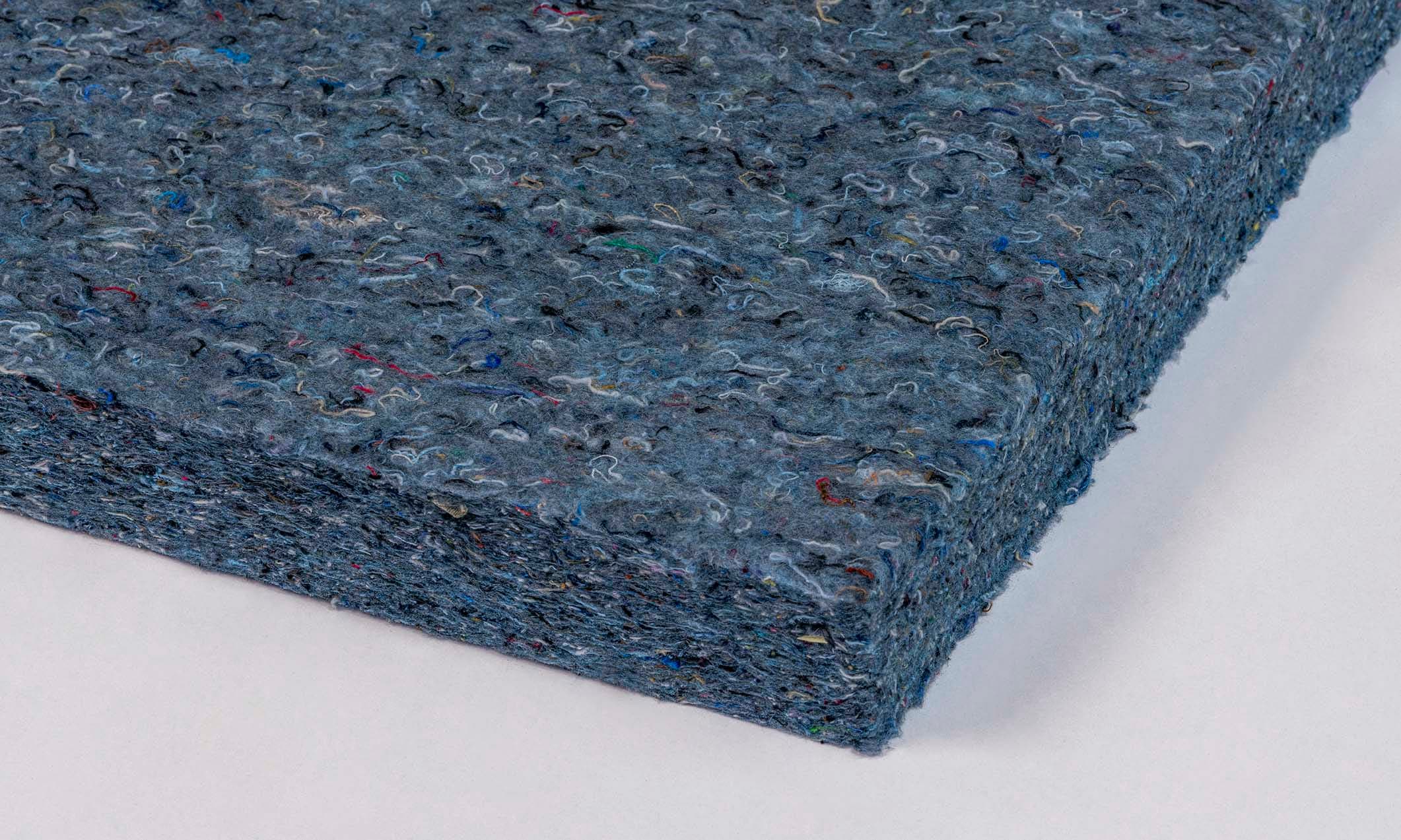
To enhance the sound insulation of buildings, sound-absorbing materials are often used as cavity fill in constructions, for example in partition walls, suspended ceilings, and floating floors. EASYpol is an excellent option for this. Also consider sustainable alternatives such as Cyclin Puur or Ecosorb, which not only perform well in terms of sound absorption but also contribute to a more environmentally friendly construction process.
What are the benefits of acoustic foam
Acoustic foams and other sound-absorbing materials reduce the reflection of sound waves, thereby shortening the reverberation time. This results in less echo and a lower noise level in a room or within a machine casing.