






Suspended ceiling
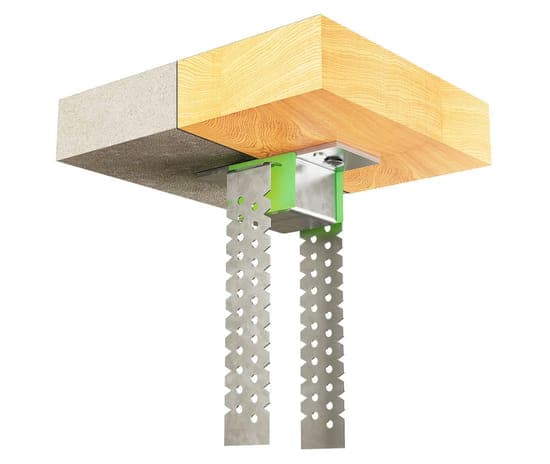
A suspended ceiling is an additional ceiling layer applied over the existing structure according to the mass-spring-mass principle. In this system, both ceilings are acoustically decoupled through spring connections, creating a gap for cavity filling. Additionally, extra mass is added to the ceiling structure. This combination ensures that vibrations and impact noise are not transmitted to the surrounding structure. The result is a significant improvement in sound insulation, against both airborne and impact noise.


Why does a suspended ceiling help against noise?
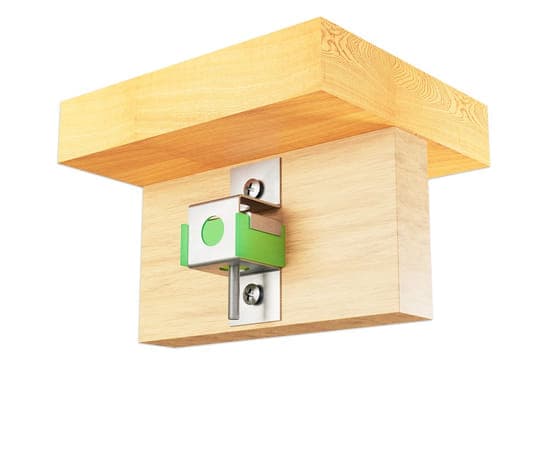
A suspended ceiling helps to reduce noise by interrupting the direct connection between the existing ceiling and the structure above. This is achieved using spring mounts that provide acoustic decoupling. Vibrations and impact noise cannot be transmitted directly to the space below. Additionally, extra mass is added to the ceiling, and a cavity is created that can be filled with sound-absorbing material. This combination of decoupling, mass, and absorption ensures that both airborne and impact noise are significantly reduced.
EASYmount soundproofing
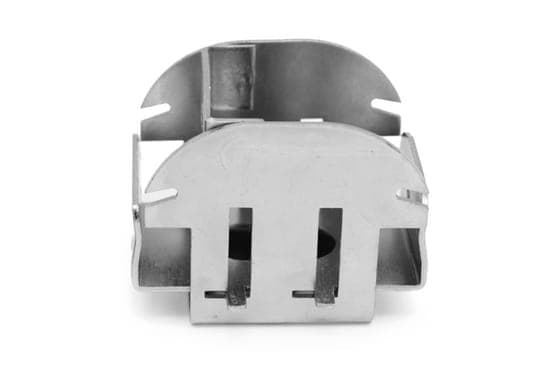
EASYmount is a mounting system for the acoustic decoupling of structures such as ceilings, walls, and floors. With the ceiling hangers and accompanying materials, you can easily create a floating construction based on the mass-spring-mass principle. The products are suitable for both small spaces and large-scale projects, ensuring efficient and sustainable sound insulation.
FAQ
What are the benefits of a suspended ceiling?
A suspended ceiling improves both airborne sound insulation and impact sound insulation of the floor above. Additionally, it reduces echo in the space and contributes to a more comfortable acoustic environment.
When do you use a suspended ceiling?
A suspended ceiling is an effective solution to improve both airborne sound insulation and impact sound insulation between rooms. The system dampens sound vibrations and limits the transfer of sound through the construction, significantly increasing acoustic comfort.
How thick should a suspended ceiling be?
The required thickness of a suspended ceiling depends on the situation and the desired insulation value. With a wooden beam ceiling, it is often possible to create a suspended ceiling with hardly any height loss in the room.
What is a suspended ceiling?
A floating ceiling is a ceiling construction designed to isolate sound or improve the acoustics in a space. It is called 'floating' because it is not directly attached to the structural ceiling but is suspended with a gap (air cavity).
How do you create a suspended ceiling?
A suspended ceiling consists of an isolated suspension system, a cavity filled with sound-absorbing material, and a heavy, solid finish, such as plasterboard.