





Sound-absorbing material
Sound absorption is used for various types of sound applications. These materials help reduce reverberation in a space. In industry and mechanical engineering, they are used to dampen the sound level.
At Fibers & Foams, we have an extensive collection of sound-absorbing materials available. Our sound-absorbing panels are almost always in stock and can be easily ordered online. This way, you can have the materials quickly delivered to your doorstep!

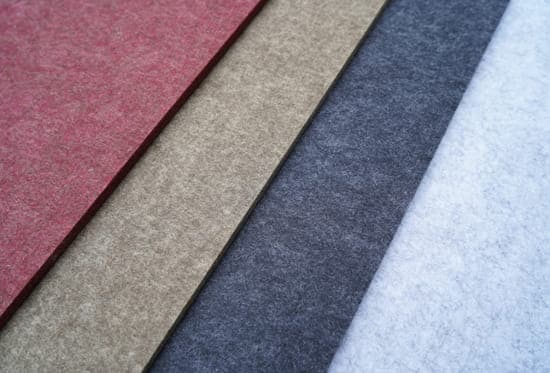


EASYpol | Polyester wool
Sound absorption
- Very long lifespan
- Insensitive to moisture
- Fireproof


Do you have a question?
Our specialists will help you


Jeroen Blekkenhorst
Inside Sales Account Manager
Get advice


What does sound absorption do?
A sound-absorbing panel does not stop sound, but rather prevents sound from being reflected. This allows sound absorption to prevent sound from re-entering the space, which improves the sound quality or acoustics in the room.
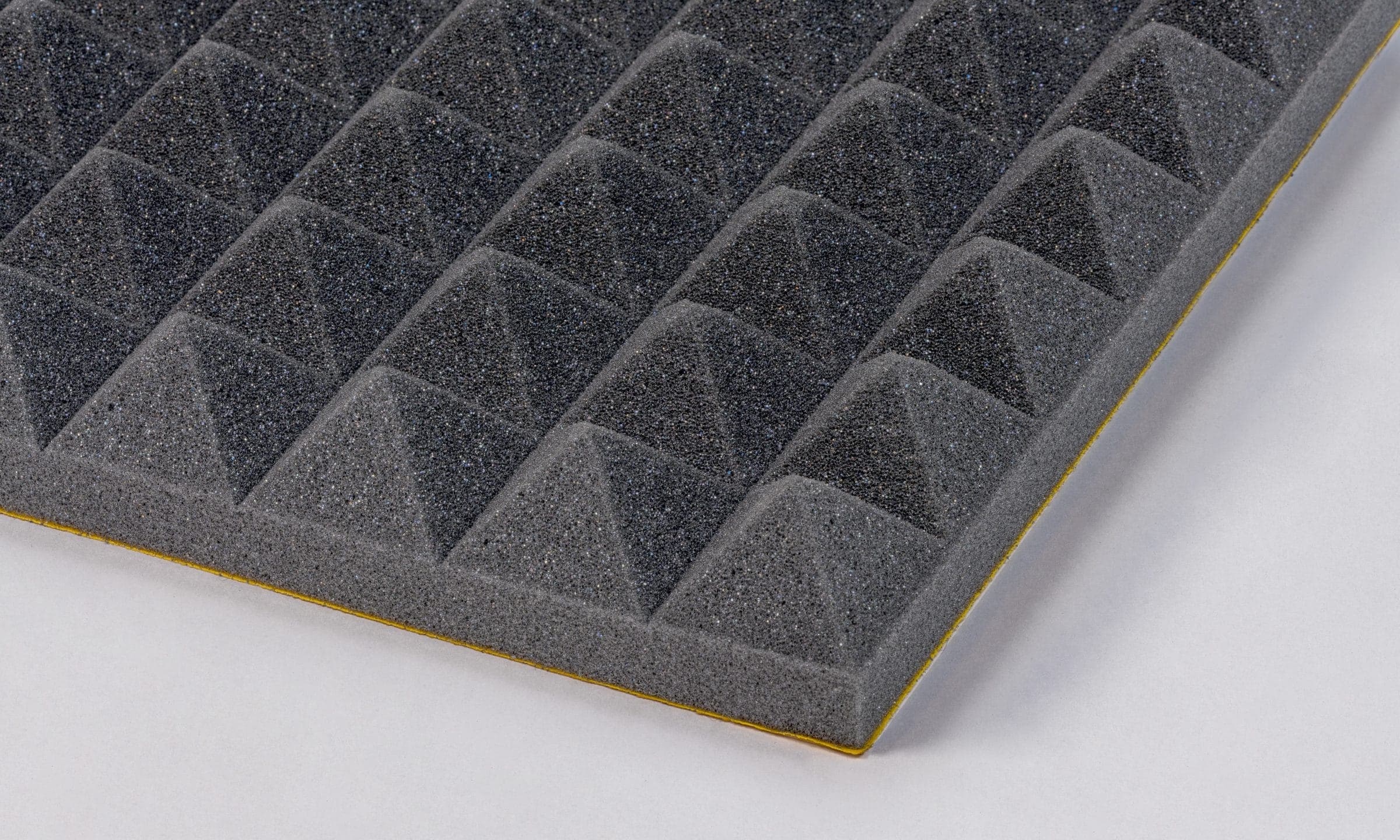
Sound absorption is primarily offered in the form of sound-absorbing panels. To effectively reduce sound, these panels need to be placed on visible surfaces. In technical applications, acoustic foam is often mentioned. A well-known example of such a sound-absorbing panel is egg crate foam.
Often, sound waves are reflected by disruptive surfaces, such as walls and ceilings of a room or enclosure. Therefore, sound-absorbing panels are equipped with a self-adhesive backing for easy application.
It is important to note that sound-absorbing panels are different from sound-insulating panels. Simply placing a sound-absorbing panel on a wall does not improve the insulation on the other side of the wall.
What material does a sound absorbing board consist of?
BAt Fibers & Foams, we specialize in sound absorption, which is why we offer the most extensive range of sound-absorbing panels.
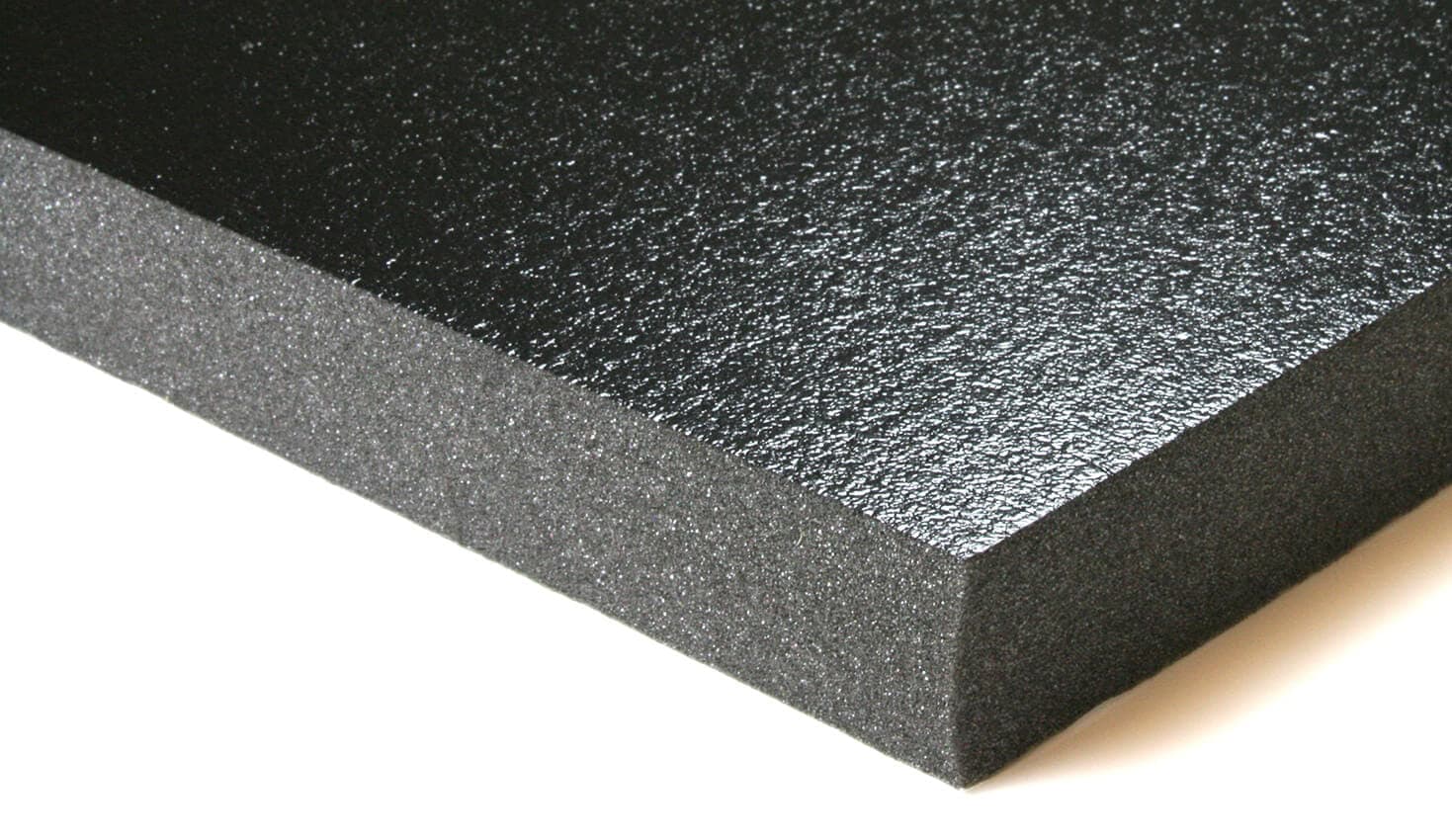
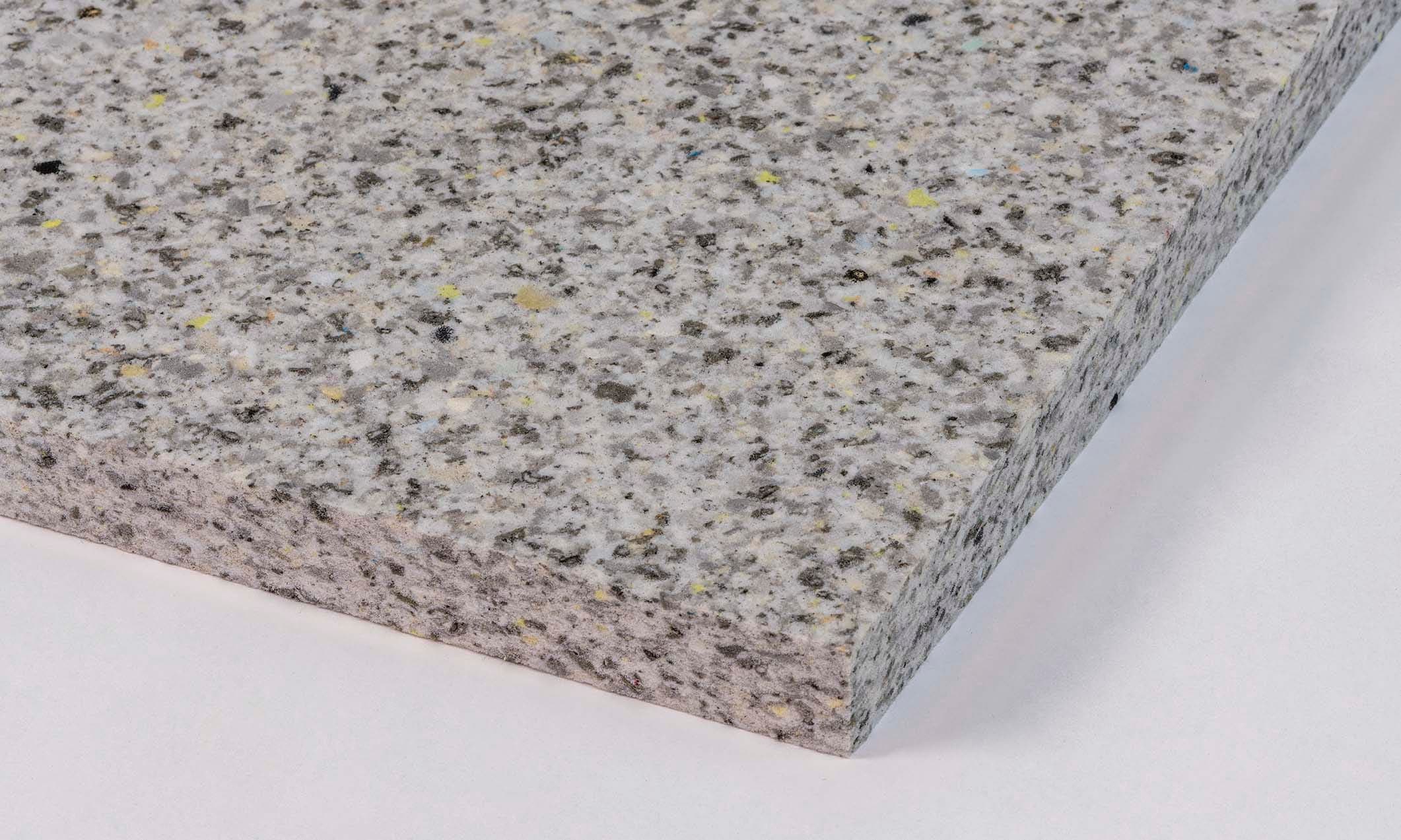
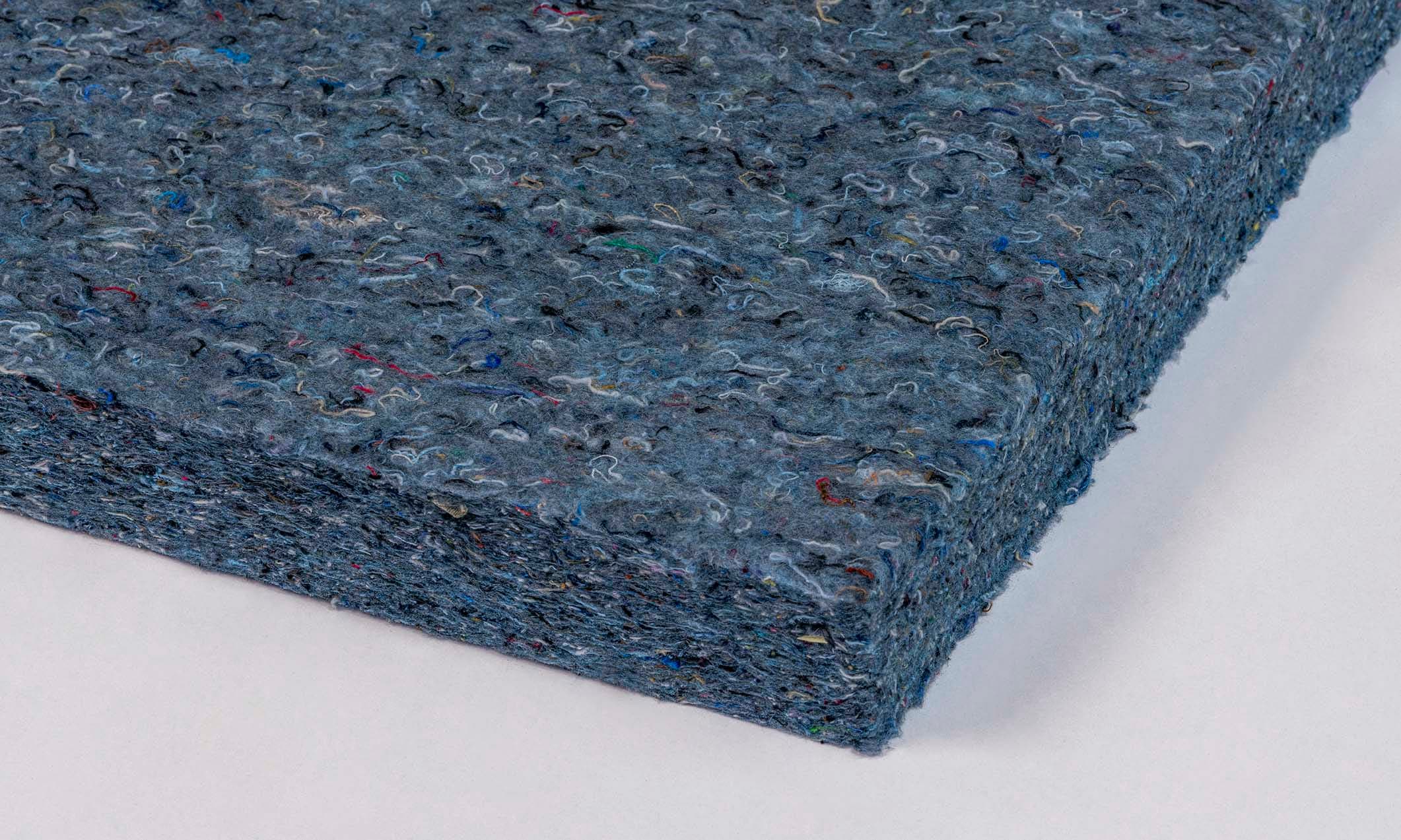
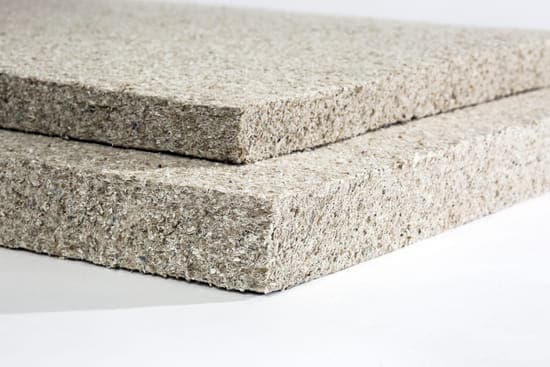
Our collection includes various materials such as polyurethane foam, melamine foam, polyester wool, and recycled materials. Although these solutions are all different, they have one thing in common: they absorb sound.
This is because all these materials have open cells. Sound waves must penetrate through these cells, causing them to lose their energy.
The damping properties of a sound-absorbing material or panel are often expressed in an Alpha value or NRC value. These are simple numbers that represent the average damping performance of a material. The higher this number (up to 1.0 or 100%), the better the damping.
The acoustic performance of sound-absorbing materials is influenced by various factors, such as the material type, cell density, fabric structure (density), thickness, any top layers, and application. In general, the thicker the material, the wider the frequency range of damping.
For example, a 6 mm material will not dampen sound in frequency ranges of 125 and 250 Hz. Materials of at least 40-50 mm thickness are needed for this purpose. Therefore, we offer various thicknesses to meet different needs.
Other properties of sound absorption boards
In addition to their primary function, each sound-absorbing material has its own advantages and disadvantages. For example, polyurethane foam offers high technical quality, is lightweight, and can be easily installed. However, it is often not suitable for use on walls or ceilings in public buildings due to its low fire safety rating, except for FireSeal.
Among our technical foams, our FireSeal sound-absorbing panel is the most distinctive. As far as we know, this is the only polyurethane foam with such a high fire safety standard that it can even be used in building escape routes.
On the other hand, acoustic ceiling and wall panels are specifically designed for public spaces. They meet high fire safety standards and are aesthetically developed to complement the interior well. Although we do not solely refer to these solutions as sound-absorbing panels, they do have a core of sound-absorbing material such as stone wool, glass wool, or polyester wool.
These acoustic solutions offer a wide range of diversity. There are tailor-made solutions for offices, industries, gymnasiums, laboratories, and more. Each situation requires different properties from the solution. For example, a gym may need impact-resistant solutions, while a kitchen may need ceiling panels that are easy to clean.
Melamine foam offers lightweight and fire-safe sound absorption. However, it is less resistant to dirt and moisture. For every acoustic problem, we offer the right solution. Do you have any questions? We are ready to assist you.
FAQ
What is sound-absorbing material?
Sound-absorbing material has an open structure that allows sound to penetrate. This prevents reflections and reduces reverberation within a room. In machine enclosures, it ensures that the noise level inside the enclosure decreases, thereby reducing noise pollution outside. Sound absorption itself is not insulation, but it can form an important part of a sound-insulating system.
How does sound-absorbing material work?
Sound-absorbing material has an open structure in which sound waves are absorbed. Part of the sound energy is converted into heat, preventing it from being reflected back into the room. This effectively reduces reverberation.
What do you use sound-absorbing material for?
Sound-absorbing material is used in spaces where a lot of reverberation occurs, such as with hard floors, high ceilings, or large glass surfaces. It is ideal for restaurants, office spaces, schools, and homes where speech intelligibility and comfort need to be improved. In addition, it is applied in machine enclosures to reduce engine or pump noise, as well as in vehicles and vessels to minimize noise disturbance.
What is the difference between sound absorption and sound insulation?
Sound absorption prevents sound waves from reflecting but does not block them. As a result, the acoustics within the room improve, while sound insulation hardly increases. Sound-insulating materials, on the other hand, are dense and heavy, making it difficult for sound to pass through the structure. Thus, sound absorption optimizes the acoustic environment within the room itself, while sound insulation ensures that sound remains inside or is kept outside.
What types of sound-absorbing materials are there?
There are different types of sound-absorbing materials, all with an open structure that captures sound waves. These are often foam- or fiber-based materials. The structure should not be too open or too dense in order to absorb sound effectively. A well-known example is convoluted foam, but for many applications better alternatives are now available, such as EASYfoam FireSeal, EASYpol, Basotect melamine foam, and Ecosorb Metisse. Each of these materials is suitable for specific applications.